
Lying Down on the Job: How One French Doctor Changed Childbirth Forever
For thousands of years, women gave birth the way nature seemed to intend — upright. The lithotomy position — where a mother lies on her back, often with her legs placed in stirrups — was introduced in 1668.
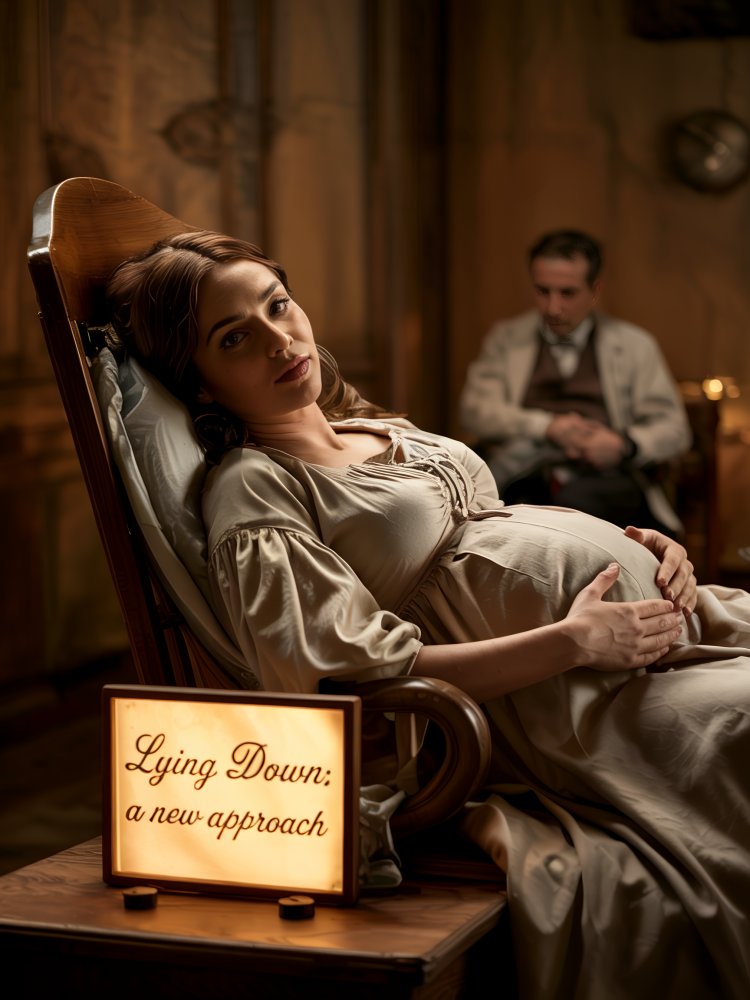
For thousands of years, women gave birth the way nature seemed to intend — upright. They squatted, knelt, or sat on birthing stools, using gravity to help ease their babies into the world. Ancient sculptures from Egypt show Cleopatra kneeling to give birth, surrounded by attendants, and evidence of birthing stools and chairs dates back to Babylonian times, around 2000–1600 BC. Surveys conducted as recently as 1961 confirmed that among 76 traditional cultures studied, only 14 spontaneously opted for a flat, on-the-back position for childbirth. So how did lying flat on your back become the standard? The answer leads us to one influential — and controversial — 17th-century French doctor.
Enter François Mauriceau
The lithotomy position — where a mother lies on her back, often with her legs placed in stirrups — was introduced by Dr. François Mauriceau in 1668. Writing that year, Mauriceau advocated for horizontal births, instructing that "the bed must be so made, that the woman being ready to be delivered, should lie on her back upon it, having her body in convenient figure."
But Mauriceau's influence went beyond just positioning. He was also the man credited with viewing pregnancy as an illness — referring to it as "a tumour of the belly" — rather than a natural condition. This classification of babies as "medical problems" helped open the door for barber-surgeons to enter the field, ushering midwives out. In other words, one man's pen helped reshape not only how women gave birth, but who was in charge of the room.
Adding royal fuel to the fire, King Louis XIV, who enjoyed watching women give birth, reportedly became frustrated by the obscured view the upright birthing stool provided and actively promoted the new reclining position. Whether out of medical conviction or royal convenience, the lying-down position spread rapidly across France and eventually the Western world.
Is It Actually Better?
Here's where things get complicated. The lithotomy position appears to be based on the comfort of medical professionals, not on the needs of the patient. Research paints a concerning picture of the risks: the position can compress blood vessels that deliver oxygenated blood to the baby, increase pain for the mother, eliminate the assistance of gravity, slow dilation, and raise the risk of serious perineal injury.
By contrast, women who use upright positions during labor experience shorter labor duration, less medical intervention, report less severe pain, and express greater satisfaction with their childbirth experience.
The Ethical Question
This history raises a profound ethical question: whose body is childbirth actually designed around? Birth moved into hospitals, and soon after, giving birth upright became associated only with poor people or those in low-income countries — anyone who gave birth on a hospital bed was expected to do it lying on her back. A practice rooted partly in a king's voyeurism and a doctor's belief that pregnancy was a disease became the global medical standard for centuries.
The good news is that attitudes are shifting. International guidelines for intrapartum care now acknowledge the importance of women being able to move during labor, and the lithotomy position is increasingly discouraged unless medically necessary. Women today are being encouraged to reclaim choices about their own bodies — choices that, it turns out, much of the world never abandoned in the first place.
References for Further Reading
- Dundes, L. (1987). "The Evolution of Maternal Birthing Position." American Journal of Public Health, 77(5), 636–641. https://ajph.aphapublications.org/doi/pdf/10.2105/AJPH.77.5.636
- Dunn, P.M. (1991). "François Mauriceau (1637–1709) and maternal posture for parturition." Archives of Disease in Childhood, 66(1), 78–79. https://doi.org/10.1136/adc.66.1_spec_no.78
- DiFranco, J.T. & Curl, M. (2014). "Healthy Birth Practice #5: Avoid Giving Birth on Your Back." Journal of Perinatal Education, 23(4), 207–210.
- Lawrence, A. et al. (2013). "Maternal positions and mobility during first stage labour." Cochrane Database of Systematic Reviews. https://doi.org/10.1002/14651858.CD003934
- ScienceDirect: Birthing Position overview. https://www.sciencedirect.com/topics/medicine-and-dentistry/birthing-position
- Snopes Fact Check: "Did Louis XIV's Birth Fetish Change Modern Obstetrics?" https://www.snopes.com/fact-check/king-louis-xiv-fetish-birth/
- BellyBelly: "Giving Birth Upright — 9 Huge Benefits." https://www.bellybelly.com.au/birth/giving-birth-upright-9-huge-benefits/